Art Crimes
Posted by Mark Allen on 31 Jul 2006 | Tagged as: Random Posts
(photo: ‘I…didn’t…do it!’ by Sam Javanrouh, 2003)

– In 2004, Elton Murphy, 49, killed Joyce Wishart, 61, in her downtown Sarasota, FL art gallery – stabbing her twenty times, and then leaving her body propped and posed to mimic a work of art hanging nearby on the gallery’s wall. Murphy, who says his full name is “The Lord God Elton Brutus Murphy” claims he is “God-like,” knows about aliens, has 1,000 followers who are under his control and has told a psychologist he has replaced the soul of his lawyer. He has claimed that he is perfectly mentally competent, is aware of his actions, and wants his trial to wrap up as soon as possible (DNA evidence linked him to the crime). The trial began in 2006 and is currently in progress.
– In 1985, police uncovered a .22-caliber rifle inside the Andrew Crispo Art Gallery in NYC, that was used to kill male model and Fashion Institute of Technology student Eigil Dag Vesti, 26, in that same year. Bernard J. LeGeros, 22, an employee at the gallery and personal assistant to Mr. Crispo, was convicted on second-degree murder charges of the model, whom he claims he killed on orders from Crispo. Vesti’s burned body was discovered on LeGeros’ father’s estate, wearing only a leather mask and shot twice in the back of the head. LeGeros is currently serving a life sentence. The dubious but well connected Crispo, then 42, was acquitted in this particular case. The flamboyant details of this infamous 80’s haut monde art world crime are bizarre and sickly glamorous, and are the subject of a non-fiction book (Bag of Toys, Warner Books, 1992) written by David France, and expanded from an article he wrote about the ordeal for Vanity Fair in 1988.
– In 1997, Irena Hatfield, director of the Lismore Regional Art Gallery, was arrested and charged with the 1985 shooting death of her husband Christopher at their Maroubra, Australia home. The rocky, complicated, erotic/revenge-driven case became an ongoing soap opera for the public, and the media reported the details of the lengthy investigation and trail extensively. Hatfield reverted back to her maiden name of Dobrijevich after she was acquitted of the crime in 2000. As well as writing a book about her ordeal (Irena, Harper Collins, 2001), and selling her story to television and film production companies, in 2006 she opened her own erotic-themed art and photography gallery, LushArt, in Surry Hills, Australia.
– In 2004, gallery owner Lori Haigh began receiving phone death threats, physical assaults and vandalism after displaying a painting at her Capobianco Gallery in San Francisco, which depicted the torturing of Iraqi prisoners by American soldiers. A few days after the controversy began, while Haigh was making preparations to temporarily close the gallery and avoid mounting trouble, a man knocked on the door of the gallery. When Haigh answered he punched her violently in the face, knocking her unconscious. The assault left her with a broken nose, injured eye and a concussion. The story became a political hot point, and the death threats towards Haigh increased and became more extreme (listen here). She has sinced closed up shop and has gotten out of the art gallery business.
– In 1911, the Mona Lisa, by Leonardo da Vinci, vanished out of the Louvre museum in Paris, France. Detectives discovered the painting’s heavy display frame discarded in a stairwell leading to one of the museum’s cloakrooms. The explosive crime naturally lead to much speculation and finger-pointing. Fiery, inductive surrealist Guillaume Apollinaire (who had once rallied for public torching of the Louvre) was jailed temporarily under suspicion of the theft, and Pablo Picasso was even held and questioned at one point – both were later released. But two years after it disappeared, it was discovered that Louvre employee Vincenzo Peruggia had stolen it, simply walking out the door with it hidden under his overcoat. He had been hired by con man Eduardo de Valfierno, who had secretly commissioned French art forger Yves Chaudron to make copies of the painting so he could sell them as the missing original. But Valfierno goofed by neglecting Peruggia (he actually didn’t need the original for the forging, just for it to go missing in the public’s eye). After keeping it in his apartment in Paris for two years, an angry and impatient Peruggia was caught attempting to sell it to a Florence art dealer. After a brief tour of Italy, the original painting was returned to the Louvre, more popular than ever.
– In 2004, a devastating fire broke out at art storage firm Momart’s warehouse on the Cromwell industrial estate in Leyton, England. Destroyed were many extremely valuable pieces of modern “Britart” owned by controversial British art mogul Charles Saatchi. Investigation later revealed that the warehouse was burgled before the fire broke out. The accumulative value of the works lost is estimated in the many millions, and the crime is still unsolved.
-In 1972, eventual serial killer Gary Gilmore won several prison art competitions (serving time up to that point for a youth spent mostly committing armed robbery and drunken, violent assaults). Those art awards, and a marked interest in bettering his IQ and an earnest, expressed interest in cultivating art as a life career prompted prison officials to grant him an early release for the sole purpose of attending an art school in Eugene Oregon. The inspiration was brief, as Gilmore didn’t attend the school or pursue art at all once out of jail – and was back to his scary, criminal ways within weeks of release. Gilmore would continue a downward spiral of serious crime and murder and end up on death row. He was executed by firing squad in 1977, before receiving a goodbye phone call on his last day from Johnny Cash, and also uttering the words “let’s do it!” A few remaining pieces of Gilmore’s work exist in a box at Utah State Historical Society in Salt Lake City, along with other artifacts from his incarceration.
– In 2006, a Buffalo high school art teacher, along with an off-duty Buffalo police officer friend, was charged with with second-degree reckless endangerment after parking in an area near several homes and businesses and firing rounds from a gun into an open lot. Suspension of the art teacher from the school is still pending (the officer was suspended without pay), and the only apparent motive in the case was boredom.

 There are some things they don’t teach you in history class, then there are some things that they don’t teach you in history class because they are too hard to believe even happened, even if they really did. Like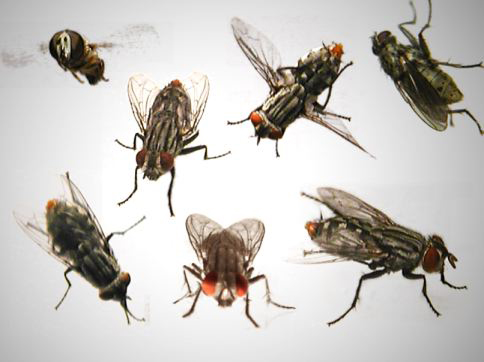
 Even though these are pretty much available widely on the web, here they all are in one place anyway. Every insult that Dr. Smith (Jonathan Harris) flung at Robby the Robot (Bob May) during the course of their “relationship” on the 1960’s TV show Lost In Space: Adlepated Amateur, Adlepated Armor Bearer, Aluminum Canary, Animated Weather Station, Arrogant Automation, As Protective as a Leaky Umbrella, Astigmatic Automaton, Automated Oaf, Babbling Birdbrain, Babbling Bumpkin, Bellicose Bumpkin, Big Mouth, Blithering Blatherskite, Blithering Booby, Bloated Blimp, Blundering Bag of Bolts, Blithering Bumpkin, Book-Making Booby, Broken-down Has Been, Brutish Product of the Mineral World, Bubble Brain, Bubble-Head, Bubble-Headed Booby, Bulbous Bumpkin, Bumbling Bag of Bolts, Bumbling Booby, Bumbling Bucket of Bolts, Bumbling Cracker Barrel, Bumptious Booby, Bumptious Braggart, Bungler, Bungling Incompetent, Cackling Cacophony, Cackling Canister, Cackling Clod, Cackling Cookoo, Cackling Coward, Cantankerous Clod, Cold Hearted Clod, Caterwauling Clod, Cautious Clump Chattering Magpie, Clanking Clod, Clod-Like Collection of Condensors, Clumsy Clod, Clumsy Cloot, Clumsy Clump, Complete Moron, Computerized Clod, Computerized Clump, Confused Compass, Cowardly Clump, Cowardly Friend, Cumbersome Clod, Cumbersome Clump, Cybernetic Simpleton, Cybernetic Skeptic, Defective Detective, Dehumanized Lie Dispenser, Demented Diode, Deplorable Dummy, Deplorable Dunderhead, Despotic Dunce, Digitised Dunce, Dippity Dunce, Disreputable Dunce, Disreputable Dunderhead, Doctor Dunderhead, Dottering Dolt, Dottering Dunderhead, Dunce Dunderhead, Elephantine Adam, Egomanicale Ethrentricity, Evasive Coward, Ferrous Frankenstein, Fiend in Tin Clothing, Floundering Flunky, Foolish Fop, Frightful Fractious Frump, Frozen Eskimo, Fugitive From a Junkheap, Fugitive From a Junkyard, Fugitive From a Scrap Heap, Fugitive From a Scrap Metal Yard, Gallumphing Gargoyle, Gargantuan Goose, Garrulous Gargoyle Ghoul, Gigantic Gargoyle Goose, Gregarious Gremlin, Hard-Headed Harbinger of Death, Hard-Headed Harbinger of Evil, Hardware Hyena, Hopeless Heap of Tainted Tin, Hulking Mass of Mechanical Ignorance, Hypertensive Hypochondriac, Ignominious Ignoramus, Ill-informed Ignoramus, Impersonal Collection of Inanimate Hardware, Incompetent Moronic Lump, Incompetent Walking Ingot, Incompetent Idiot, Incompetent Imbecile, Ineffectual Ineptitude Inept Gold Bricker, Inept Idiot, Infamous Informer, Ingot of Ingratitude, Ingrate, Insensitive Brute, Insensitive Clump, Insensitive Idiot, Insensitive Machine, Insipid Ineptitude, Iron-Borne Ingrate, Irresponsible Winebibber, Jabbering Jackanape, Jabbering Jeremiah, Jabbering Judas, Jangling Junkheap, Jespoty Dunce, John Barley Corn, Judas Juvenile, Junkpile Klunker, Know Nothing Numskull, Lagert Lamebrained Lump, Lead-lined Lothario, Lead-lined Lump, Lily Livered Lump, Lily-Livered Lead-Lined Lummox, Little Mother, Ludricous Lump, Lugubrious Lagert, Lugubrious Lump, Magnificent Mobile, Malicious Moron, Mass of Fear, Mealy-mouthed Rogue, Meandering Mental Midget, Mechanical Dunderhead, Mechanical Friend, Mechanical Meddler, Mechanical Misery, Mechanical Misfit, Mechanical Monolith, Mechanical Moron, Mechanical Murderer, Meddler, Medical School Dropout, Mediocre Medical Misfit, Mental Midget, Metallic Ham, Metallic Monstrosity, Metallic Murderer, Metallurgical Friend, Miserable Mass of Metal, Miserable Mechanism, Misguided Moron, Mechanical Misery, Misshapen Mummy, Monstrous Mountebank, Mechanized Misguided Moron, Monstrous Metallurgical Meddler, Mr. Wrongway Computer, Mumbling Mass of Metal, My Insensitive Friend, Myna Bird, Nattering Ninny, Neanderthal Ninny, Negligent Ninny, Nervous Ninny, Nickering, Ninny Nincompoop, Ninny Noxious, Ninny, Obsolete Oaf, Obsolete Piece of Scrap Metal, Old Booby, Overcautious Concoction, Overgrown Ninny, Oversized Oaf, Parsimonious Puppet, Pathetic Pomposity, Pedagogical Pip-squeak, Pitiable Pip-squeak, Plasticized Parrot, Pompous Pip-squeak, Ponderous Plumber, Pot Headed Prankster, Pot-Bellied Prankster, Pot-Bellied Pumpkin, Powered Prankster, Preening Popinjay, Presumptuous Pip-Squeak, Presumptuous Popinjay, Pretentious Popinjay, Primitive Pile of Pistons, Proverbial Neanderthal Ninny, Puny Pip-squeak, Pusillanimous Pinhead, Pusillanimous Pip-squeak, Pusillanimous Puncher, Pusillanimous Punkah, Pusillanimous Puppet, Pusillanimous Tyrant, Quivering Quintessence of Fear, Ramshackled Romeo, Rattletrap, Real Great Goose, Ridiculous Robot, Ridiculous Roustabout, Ridiculous Ruin, Robust Rock Hound, Rolly-Poly, Rowdy, Rusty Rasputin, Sanctimonious Scatterbrain, Scurrilous Scatterbrain, Sententious Sloth, Sickening Cybernetic, Silent Sentinel, Silly Goose, Silly Old Ninny, Silly Sausage, Silly Sloth, Silly Stupid Lovable Old Ninny, Silver-Plated Sellout, Simple Simon, Slick Sophisticated & Charming Companion, Snivelling Cinderbox, Sorry Specimen of Computerhood, Stalwart Companion, Stalwart Sortie, Steely-Eyed Sorcerer, Stubborn Clatterbrain, Stupid Friend, Tarnished Friend, Tarnished Trumpet, Tattletale, Terrified Mechanical Dunderhead, Tin-Plated Fool, Tin-Plated Fraud, Tin-Plated Snitch, Tin-Plated Tattletale, Tin-Plated Tintinnabulation, Tin-Plated Traitor, Tin-Plated Tyrant, Tintinnabulation, Tin Can, Tiresome Thesaurus, Traitor, Traitorous Electronic Junk Pile, Traitorous Tin-Plated Fugitive from a Junkyard, Traitorous Tintinnabulation, Traitorous Transistorized Toad, Transistorized Tiger, Treasonous Tyrant, Trusty Aid, Tyrannical Tin Plate, Tyrannus Thesaurus, Unabridged Dictionary, Unconscious Concoction, Unctuous Underling, Uncultured Clump, Ungrateful Underling, Ungrateful Wretch, Unspeakable Insult, Weakling, Worry Wart, Worthless Electronic Scrapheap, Wretch, Wrong Way Computer.
 Are you a movie buff like I am? Has your heart become heavily-weighted with academic cultural theory, brainy reference points and disingenuous reactions? Do you suffer from cinematic irony implosion? Recently, when trying to find out about films I want to rent, I’ve forgone the usual paganistic blogs, flesh-worshiping review sites, upside-down crucifix-wearing DVD listing books and also IMDB.com (which I’ve heard eats aborted human fetuses). I’ve clensed my palette, and opened my eyes to a whole new way of thinking when it comes to the art of film, while using the


 Composer David Cunningham is perhaps the only person to ever conceive a half-way credible “answer” to the questions raised by John Cage’s classic composition
 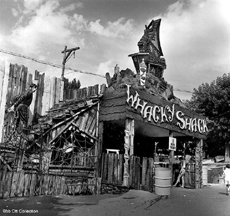 I recently tried to account the history of automated funhouse rides at amusement parks, and was disappointed at the lack of information that comes up when you punch “funhouseâ€? into Google (the Stooges album hogs all the links). I soon realized that this is because the official name of this type of ride is a
 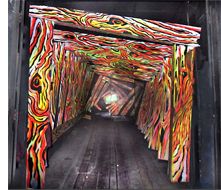 The origin of dark rides spawned off an even earlier version of the attraction called “old millâ€? rides (invented by George W. Schofield in 1902). Old mills were based on bodies of water (often man made), where riders would get in two or four-seater boats and float or paddle through a long dark tunnel or structure that had spookish scenery built into it. Old mills quickly developed a “tunnel of loveâ€? reputation for the hormonally curious (young and old). This lead to the addition of a soon-to-be mainstay characteristic to the attraction: automated noise-makers built within the structures (crashing symbols, cowbells on strings, air whistles). These were meant to surprise riders and comically break up any heavy petting that might be going on, as well as be audible from the outside (the allure being that if noises were needed to prevent such carnal behavior inside – then it must be going on). Hence old mill rides, obviously, became quite popular during Victorian times.
 The first automated “dark rideâ€? was invented by a man named
The first automated “dark ride� was invented by a man named  The first official name of the attraction was a “pretzel ride� because of the ride’s twisting path (the name ‘firefly’ was a second-runner because of the way the car would spark sometimes along the electric track). The first cars in these rides also had a large, weighted metal pretzel designs on the front, which were actually there to keep the car from tipping forward on the track. Because the cars ran on electricity and the features inside were triggered by the car, this meant that William Cassidy and partners could create transportable versions of his pretzel ride and sell them to amusement parks around the country (their price: $1,200). Sales were brisk. Even though Cassidy had the idea patented, copycats obviously sprang up as the attraction became a standard at any amusement park. Dark rides appeared up all over the country with names like Laff-In-the-Dark, Spook-A-Rama, The Devil Chaser, Paris After Dark and Jungle Land.
The first official name of the attraction was a “pretzel rideâ€? because of the ride’s twisting path (the name ‘firefly’ was a second-runner because of the way the car would spark sometimes along the electric track). The first cars in these rides also had a large, weighted metal pretzel designs on the front, which were actually there to keep the car from tipping forward on the track. Because the cars ran on electricity and the features inside were triggered by the car, this meant that William Cassidy and partners could create transportable versions of his pretzel ride and sell them to amusement parks around the country (their price: $1,200). Sales were brisk. Even though Cassidy had the idea patented, copycats obviously sprang up as the attraction became a standard at any amusement park. Dark rides appeared up all over the country with names like Laff-In-the-Dark, Spook-A-Rama, The Devil Chaser, Paris After Dark and Jungle Land. As time went on, new features changed the shape and feel of the ride. A second story was added (with the car being pulled up the initial incline by a chain) which lead to some rides using gravity along the gradual decline instead of an electric track. The introduction of rotating cars made many of the car-triggered automated stunts impractical (since the riders might be facing the wrong direction) and constantly-lit scenarios that were always viewable began to be featured more and more. And as technology improved, so did the rides. Automated low tech scenarios were soon replaced with recording devices, elaborate lighting and effects (not to mention cool blasts of air-conditioning) and even film and video projection – with the tradition of leaving the rider blind in the dark between each “unexpectedâ€? event along the attraction more or less remaining a mainstay.
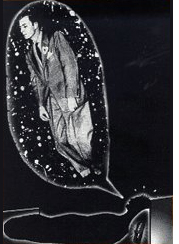 Dion McGregor may go down in history as the laziest artist of all time. His medium? Sleep talking.





 Mark on Facebook
 Mark on Twitter
 Mark on Instagram
 Mark on YouTube
 Email Mark here


 The Flying Lizards: A Band Arranged According to the Laws of Chance [Sound Collector #6, 2001]
 Who Is Harry Stephen Keeler? [A To Izzard, A Harry Stephen Keeler Companion, Ramble House]
 Bob [blind]
 David [deaf]
 Greg Walloch
[cerebral palsy and famous]
Greg Walloch
[cerebral palsy and famous] Kevin [lost left leg]
 Victor [too skinny]
 Derek [lost most of right arm]


 Trip to the Middle of Nowhere
 Paris
Paris Columbine High School
 Archives of Harry Stephen Keeler
 Central Park at night


